You’ve found us. Maybe through a search, maybe through Booking.com, maybe because a friend mentioned Portsoy. Now you’re staring at two buttons — one on an OTA, one on our own website — and wondering if it actually matters which one you click.
It does. Here’s exactly what changes, and why.
What Happens When You Book Through an OTA
Booking.com, Expedia and similar sites are useful for browsing — but every booking made through them costs the hotel a commission, typically 15–20% of the room rate, paid straight to the platform. That’s not a guess; it’s standard across the UK independent hotel sector, and it’s the same whether you’re booking a room in Portsoy, Cullen or Edinburgh.
That commission has to come from somewhere. In practice, it means:
Less budget for the extras a small, family-run hotel can offer when it keeps the full rate — a free upgrade, a late checkout, a bottle of something nice waiting in the room.
A booking relationship that belongs to the OTA, not the hotel. We can’t email you before your stay with local tips, or reach you directly if your room needs a small change — the platform sits in between.
A “guest record” that’s really the OTA’s guest record. If you ever want to rebook, change dates, or ask a quick question, you’re often routed back through their system rather than just calling us.
None of this means OTAs are bad — they’re genuinely useful for comparing hotels when you don’t know an area yet. But once you do know where you want to stay, there’s very little reason to keep the middleman.
Direct vs OTA: Side-by-Side
Booking Direct with Station Hotel Portsoy
Booking Through an OTA
Room rate
Same or better — no added OTA margin
Often identical, sometimes marked up
Commission
£0 goes to a third party
15–20% goes to the platform
Cancellation flexibility
We can talk it through directly with you
Fixed by OTA policy, harder to adjust
Pre-arrival contact
Direct line to the hotel — ask us anything
Routed through the platform’s messaging
Local knowledge before you arrive
Yes — ask about tides, walks, dinner bookings
Not offered
Room upgrade if available
Possible, at our discretion
Rarely offered
Who you’re supporting
A small, family-run Portsoy hotel, directly
The hotel and a global platform
Booking changes
One phone call
Platform ticket / hold times
Why It Matters for a Hotel Our Size
We’re not a chain with a call centre. Station Hotel Portsoy is run by local team — every direct booking is money that stays in Portsoy, supports local staff, and goes back into keeping the hotel comfortable for the next guest. When you book direct, you’re not just getting a room; you’re dealing with the people who’ll actually greet you at the door.
(If you’re currently running a direct-booking incentive — a discount code, a complimentary extra, or a seasonal perk — insert it here, e.g. “Book direct this month and we’ll include a full Scottish breakfast, free.”)
Common Mistakes Guests Make When Comparing
Assuming the OTA price is always lower. It’s frequently identical, and sometimes higher once fees are added at checkout.
Not checking the hotel’s own site at all. Many travellers shortlist on an OTA and book there out of habit, without ever visiting the hotel’s website to compare.
Overlooking what’s included. A “cheaper” OTA rate can exclude breakfast or flexible cancellation that a direct rate includes as standard.
Forgetting they can just call. If a room isn’t showing availability for your exact dates, ringing the hotel directly often turns up options an OTA calendar won’t show.
Is it actually cheaper to book direct with a hotel? Often, yes — and even when the rate is the same, direct bookings frequently include extras (flexible cancellation, breakfast, or upgrades) that OTA rates don’t.
Does Station Hotel Portsoy price-match Booking.com or Expedia? Our direct rates are set to be as good as, or better than, any OTA listing — and booking direct means the full value of your stay goes to the hotel, not a platform commission.
What if I’ve already booked through an OTA — can I still contact the hotel directly? Yes. Feel free to call or WhatsApp us with any questions about your stay, even if you booked elsewhere.
Why do hotels prefer direct bookings? Because OTAs charge a commission of roughly 15–20% per booking. A direct booking means the hotel keeps the full rate, which allows us to offer better value and service directly to guests.
If you’ve ever opened Booking.com, then opened the hotel’s own website in another tab, then wondered if you’re actually comparing anything at... Read More
Comments
Why Hotel Direct Rates Are Changing | Station Hotel Portsoy
September 1, 2026 7:33 am
[…] more on the practical side of booking direct, have a look at our earlier posts on Book Direct vs Booking.com and Hotel Cancellation Policies […]
Contains information related to marketing campaigns of the user. These are shared with Google AdWords / Google Ads when the Google Ads and Google Analytics accounts are linked together.
90 days
__utma
ID used to identify users and sessions
2 years after last activity
__utmt
Used to monitor number of Google Analytics server requests
10 minutes
__utmb
Used to distinguish new sessions and visits. This cookie is set when the GA.js javascript library is loaded and there is no existing __utmb cookie. The cookie is updated every time data is sent to the Google Analytics server.
30 minutes after last activity
__utmc
Used only with old Urchin versions of Google Analytics and not with GA.js. Was used to distinguish between new sessions and visits at the end of a session.
End of session (browser)
__utmz
Contains information about the traffic source or campaign that directed user to the website. The cookie is set when the GA.js javascript is loaded and updated when data is sent to the Google Anaytics server
6 months after last activity
__utmv
Contains custom information set by the web developer via the _setCustomVar method in Google Analytics. This cookie is updated every time new data is sent to the Google Analytics server.
2 years after last activity
__utmx
Used to determine whether a user is included in an A / B or Multivariate test.
18 months
_ga
ID used to identify users
2 years
_gali
Used by Google Analytics to determine which links on a page are being clicked
30 seconds
_ga_
ID used to identify users
2 years
_gid
ID used to identify users for 24 hours after last activity
24 hours
_gat
Used to monitor number of Google Analytics server requests when using Google Tag Manager
1 minute
Marketing cookies are used to follow visitors to websites. The intention is to show ads that are relevant and engaging to the individual user.
Facebook Pixel is a web analytics service that tracks and reports website traffic.

 by
by 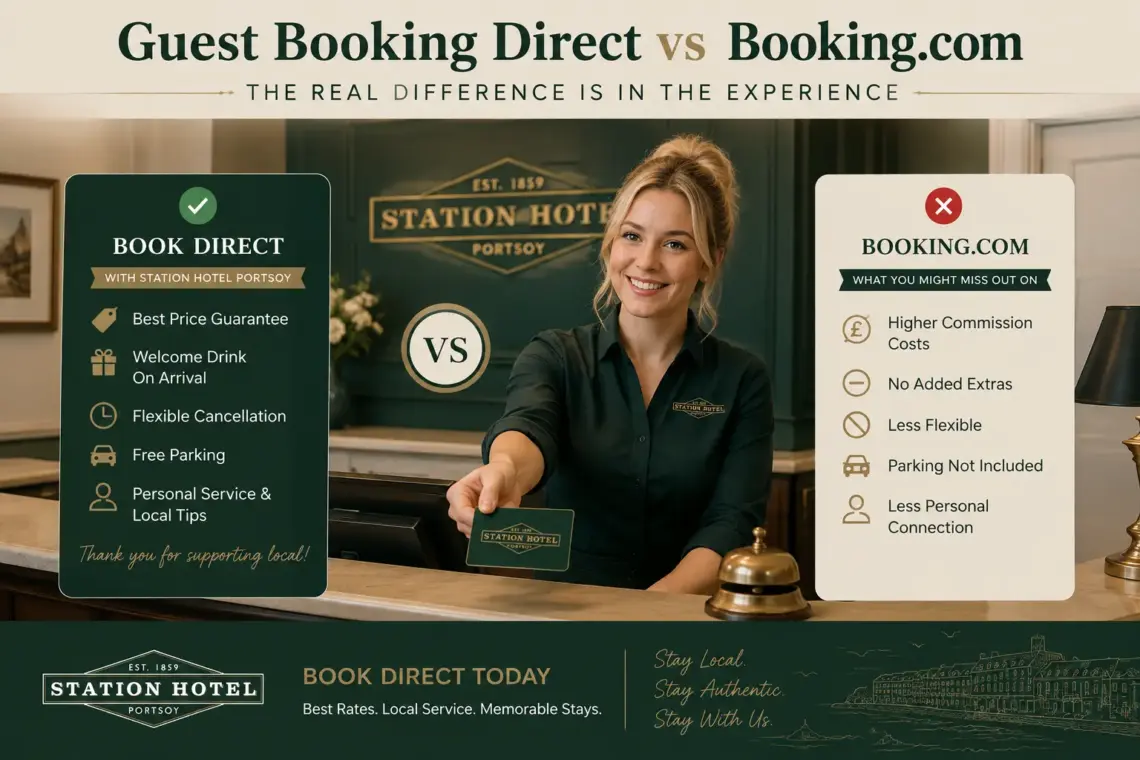


[…] more on the practical side of booking direct, have a look at our earlier posts on Book Direct vs Booking.com and Hotel Cancellation Policies […]